FAQ's
Have questions about pool plastering or remodeling?
We’ve compiled answers to the most common questions to help you understand the process, materials, and options available for your pool project.
If your plaster is rough, stained, peeling, or cracking, it's likely time to re-plaster. The best approach is to have a professional inspect your pool and provide honest recommendations.
The pool is drained, fittings and tile edges are prepped, the surface is cleaned and bonded, then new plaster is applied and smoothed. The pool is refilled and goes through a startup process to balance water chemistry.
Absolutely. We offer marble, quartz, and pebble aggregates in a variety of colors. We’ll help you find a style that fits your preferences and budget.
No. With modern bond coats and preparation techniques, complete removal is unnecessary and not cost-effective.
Aggregate is the stone or material mixed with plaster to provide strength and texture. Marble is smooth and classic, quartz adds color and durability, and pebble is the most durable with a textured finish.
Yes — brush 3–4 times a day for 2 weeks to help cure the surface and remove plaster dust. Keep your filter running 24/7 and backwash frequently.
Only if the tile is loose or missing grout. We’ll evaluate whether a full re-tile or a minor repair is needed.v
Basic target ranges:
Chlorine: 1.5–3.0 ppm
pH: 7.2–7.8
Alkalinity: 80–120 ppm
Calcium: 200–450 ppm
Cyanuric Acid: 40–60 ppm
TDS: Under 1000 ppm
Most re-plaster jobs take 3–4 days, weather permitting. Additional services like tile, coping, or deck work may extend the timeline slightly.
Wait until the startup process is complete — typically around 1 to 2 weeks — to ensure water chemistry stabilizes and the plaster cures properly.
Yes. If your pool is painted, it must be sandblasted because plaster won’t bond to paint.
Exposed aggregate finishes are acid-washed to reveal the texture of the stone. They cost more due to the materials and extra labor involved but offer superior durability and visual appeal.
White plaster uses white marble and Portland cement. Colored options include pigmented cements or dark aggregates like green or black marble, often enhanced with quartz.
Yes. We cut and chip the old plaster just below the tile line to match the original finish.
We can cut the concrete back and install coping if desired — especially recommended in areas prone to ground movement or cracking.
If you have older copper components, they should be replaced to avoid staining. Upgraded pumps and filters improve water clarity and efficiency.
What to Expect from Start to Splash
Plastering is precision work, not just cement. Our 5-Step “Start to Splash” Process blends expert prep, StoneScapes®/quartz finishes, and a strict cure-and-brush routine for a stain-resistant surface that keeps your pool crystal clear under the Texas sun.
Call & Consult
Speak directly with a knowledgeable, friendly team member.
On-Site Visit
In-person inspection and expert recommendations.
02
Project Kickoff
Start date, prep work, and clear schedule set in writing.
03
Daily Updates
Transparent progress reporting—no wondering what’s next.
Final Check + Tips
Full walkthrough and water care recommendations.
05
News & Article
Stay informed with expert tips, project highlights, and updates from the world of pool remodeling and outdoor living.
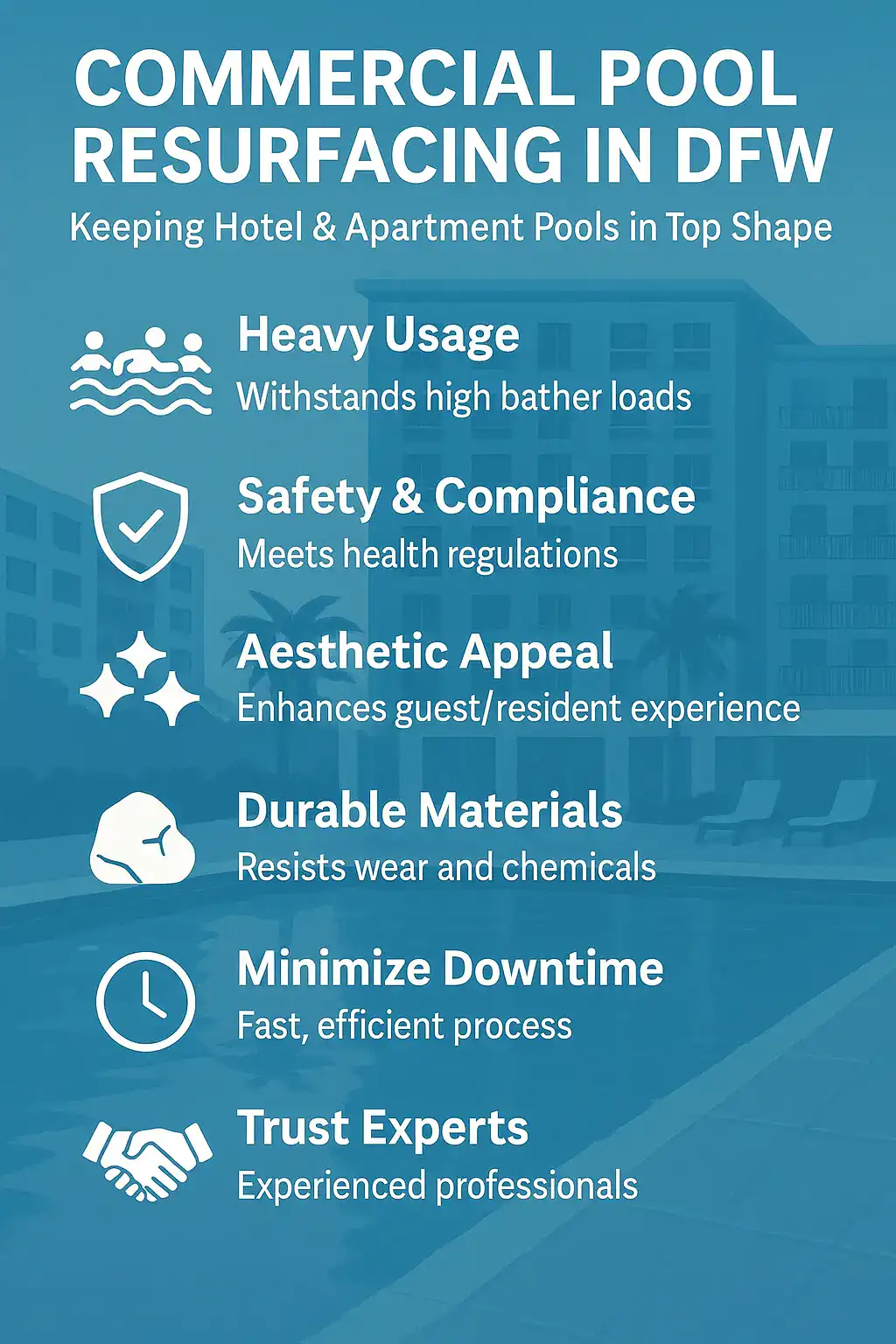
Commercial Pool Resurfacing in DFW
Do you manage a commercial or public pool in the Dallas-Fort Worth area? Whether it’s

The Pool Replastering Process and Timeline
If your pool's surface is rough, stained, or showing signs of wear, pool replastering can

Choosing the Right Pool Plaster Finish for Your Dallas Home
Your pool's interior surface is more than just a shell — it's a major design

Maintenance Tips to Extend the Life of Your Pool Surface
Keeping your pool’s plaster in top condition isn’t just about looks – it can save